
Firstly, it’s not a disease but a symptom of an underlying problem. In laymans terms it’s another word for bee diarrhoea.
The most common causes are:
- Long periods of confinement within the hive especially during winter when temperatures are prohibitive for the bees to leave the hive to defecate ie: if the temperature stays below 10-12 degrees celcius for a period of 2 weeks.
- Another reason could be, if the bees ingest food with high levels of moisture for example poor quality or fermented syrup, unripe honey, syrup being fed too late in the season (fondant is a better choice for emergency feeding during the winter months)
What does dysentery look like?
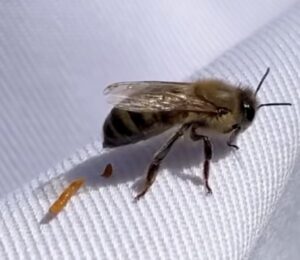
- It’s usually yellowy mustard but can vary pending on the bees diet.
- It can present itself as tiny dots, streaks, splatters and can sometimes be sausage shaped
Healthy bee faeces is made up of digested pollen, nectar, uric acid, solid waste matters and a low to moderate moisture content. This moisture content is substantially increased if the bee is suffering from dysentery. Normal faeces are generally solid or semi solid.
Bees urine on the other hand is a different story. Bees do not urinate in the same way as humans. Uric acid which is the primary constituent of bee urine and is the bees main nitrogenous waste product is a liquid waste formed in the bees malpighian tubules – similar to our kidneys. The liquid formed is released with the solid waste through their anus.
What are the signs and symptoms?
- Bee poo at the front of the hive
- Bee poo on the landing board
- When doing an inspection inside the hive, signs of dysentery can be seen anywhere ie: on the frames, the walls of the hive, on the floor insert etc..
What can the beekeeper do?
Unfortunately there is no magic remedy but if you maintain good standards of apiary hygiene, ensure the colony has good quality stores, balance ventilation and heat within the hive, there should be little or no problems. It is advisable to feed fondant if needed during the winter month.
Much boils down to “cleansing flights”.
When you’re out and about in your apiary during winter and see bees flying, they are more than likely taking cleansing flights. They go on short trips to defecate and they also remove any debris from the hive. These flights are also an opportunity for them to stretch and warm up their muscles too. Bees are very hygienic organized little creatures and do not want to poo in their home and can hold waste matter in their rectums for 2 weeks. However if the weather isn’t ok with temperatures not rising above 10-12 degrees celcius they might have no choice other than to defecate in or in the immediate vicinity of their home.
Don’t forget to keep an eye out for all the signs described!
Always do the best for your bees 🐝
Apis Mellifera Mellifera – November