by Amanda | Oct 14, 2025 | News
Government response underway following confirmed sighting of an Asian Hornet
- Asian Hornet (also known as the Yellow-legged Hornet) poses a significant threat to Ireland’s biodiversity.
- New taskforce convened to co-ordinate response to a confirmed individual sighting reported by a member of the public
- Public asked to report suspected sightings to the National Biodiversity Data Centre
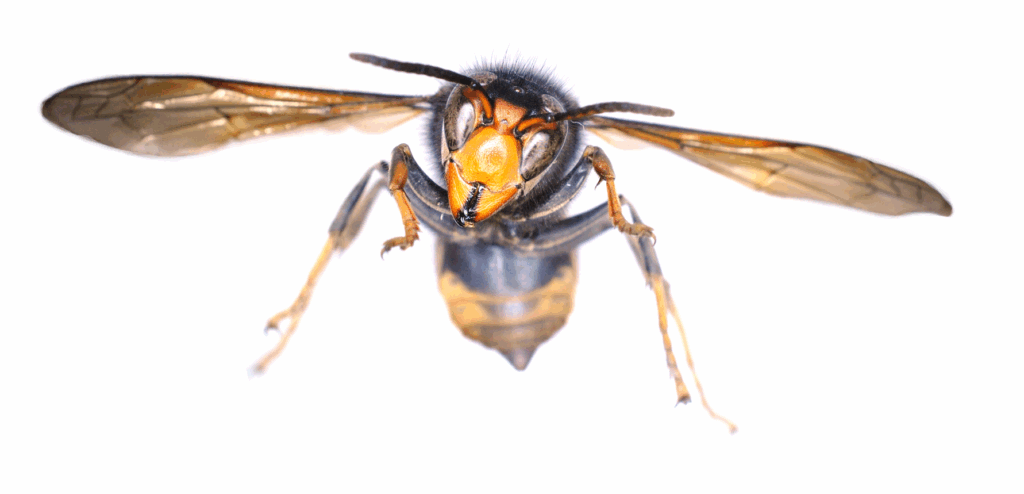
The National Parks and Wildlife Service has today (13th August) confirmed a recent sighting and subsequent capture of an Asian Hornet (Vespa velutina) in the Cork area marking a biosecurity alert for Ireland. Asian Hornet pose a significant threat to biodiversity in Ireland as even a single nest can devastate honeybee populations. The discovery of an Asian Hornet does not pose a significant public health risk.
The sighting has triggered a government led response with the establishment of a new taskforce. The Asian Hornet Management Group (AHMG) chaired by the NPWS includes the Department of Agriculture Food and the Marine, the National Biodiversity Data Centre and the National Museum of Ireland and will co-ordinate efforts, gather further information and monitor the situation over the coming weeks.
Speaking about the incident, Minister of State for Nature, Heritage and Biodiversity, Christopher O’Sullivan TD said:
“Asian Hornets are a threat to our native pollinators and our biodiversity. We must take even a single sighting very seriously. NPWS responded quickly to this report, with a team of experts rapidly tasked to monitor and survey the area. One individual was captured and a co-ordinated response is now underway through a new cross government taskforce who will continue to monitor the situation. We are also very grateful for the support of beekeepers and their associations in this endeavour.”
“This incident shows us that members of the public are our eyes on the ground. Early detection is key if we are to prevent the establishment of this invasive species. I urge everyone to be vigilant and inform themselves so that they can recognise and report any sightings of the Asian Hornet to help us contain this invasive species and protect our biodiversity.”
The sighting was reported to the National Biodiversity Data Centre’s website https://records.biodiversityireland.ie/record/invasives by a member of the public. A photograph was included, which was confirmed as an Asian Hornet by entomologists at both the National Museum of Ireland and NPWS, triggering a rapid response protocol. A survey team was quickly deployed and extensive monitoring and surveying conducted. No evidence of a hornet nest or any other hornet activity was initially observed, however subsequent surveillance led to the trapping of an Asian Hornet on 12th August. . Extensive monitoring will continue over the coming weeks to determine if this is one individual or if there is evidence of a larger population. .
Members of the public are being asked to remain vigilant and report any suspected sightings through the National Biodiversity Data Centre’s Alien Watch reporting portal at https://records.biodiversityireland.ie/record/invasives.
If you suspect you have spotted an Asian Hornet, do not attempt to disturb or capture the hornet. While not generally aggressive, it may sting if provoked. Any photographs, location coordinates, or samples (if safe to collect post-mortem) are extremely valuable to the response team. It is important to note that Asian Hornet can be easily confused with native species such as the giant woodwasp, the dark giant horsefly, and the common wasp.
Photo free to use, credit A O’Hanlon, National Museum of Ireland.
The public are being asked to remain vigilant and report any suspected sightings through the National Biodiversity Data Centre’s reporting portal at https://records.biodiversityireland.ie/record/invasives including a photograph if possible.
by siteadmin | Nov 22, 2025 | News
Firstly, it’s not a disease but a symptom of an underlying problem. In laymans terms it’s another word for bee diarrhoea.
The most common causes are:
- Long periods of confinement within the hive especially during winter when temperatures are prohibitive for the bees to leave the hive to defecate ie: if the temperature stays below 10-12 degrees celcius for a period of 2 weeks.
- Another reason could be, if the bees ingest food with high levels of moisture for example poor quality or fermented syrup, unripe honey, syrup being fed too late in the season (fondant is a better choice for emergency feeding during the winter months)
What does dysentery look like?
- It’s usually yellowy mustard but can vary pending on the bees diet.
- It can present itself as tiny dots, streaks, splatters and can sometimes be sausage shaped
Healthy bee faeces is made up of digested pollen, nectar, uric acid, solid waste matters and a low to moderate moisture content. This moisture content is substantially increased if the bee is suffering from dysentery. Normal faeces are generally solid or semi solid.
Bees urine on the other hand is a different story. Bees do not urinate in the same way as humans. Uric acid which is the primary constituent of bee urine and is the bees main nitrogenous waste product is a liquid waste formed in the bees malpighian tubules – similar to our kidneys. The liquid formed is released with the solid waste through their anus.
What are the signs and symptoms?
- Bee poo at the front of the hive
- Bee poo on the landing board
- When doing an inspection inside the hive, signs of dysentery can be seen anywhere ie: on the frames, the walls of the hive, on the floor insert etc..
What can the beekeeper do?
Unfortunately there is no magic remedy but if you maintain good standards of apiary hygiene, ensure the colony has good quality stores, balance ventilation and heat within the hive, there should be little or no problems. It is advisable to feed fondant if needed during the winter month.
Much boils down to “cleansing flights”.
When you’re out and about in your apiary during winter and see bees flying, they are more than likely taking cleansing flights. They go on short trips to defecate and they also remove any debris from the hive. These flights are also an opportunity for them to stretch and warm up their muscles too. Bees are very hygienic organized little creatures and do not want to poo in their home and can hold waste matter in their rectums for 2 weeks. However if the weather isn’t ok with temperatures not rising above 10-12 degrees celcius they might have no choice other than to defecate in or in the immediate vicinity of their home.
Don’t forget to keep an eye out for all the signs described!
Always do the best for your bees 🐝
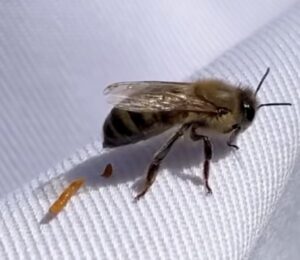
Apis Mellifera Mellifera – November
by Amanda | Oct 14, 2025 | Awards, News
Celebrating Our Member Wins at the Renowned London Honey Show – 2024
We’re thrilled to share the incredible news that one of our very own founding members of Irish Bee Foundation – Mairead Dineen Love has achieved two prestigious wins at the historic London Honey Show, accompanied by fellow member Mary Downey, with Mary bringing home 2 wins of her own. Mairead is also the founding member of the Fastnet Area Beekeepers Association (FABKA) based in West Cork, with Mary being one of the first members to join in 2020.
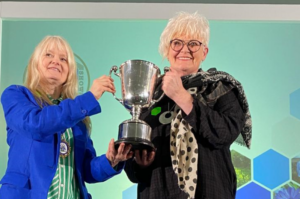
Mairead Dineen Love (Right)
Whilst many associations can face difficulty in getting set up and in building a reputation, there is no fear of this in FABKA, who are standing proud on international stages representing Irish Honey.
Since its inception in 1923, the London Honey Show has established itself as one of the world’s most renowned events in beekeeping, drawing top apiarists and honey producers globally to compete for awards that celebrate excellence in purity, flavour, and craftsmanship.
This year, Irish excellence shone brightly as Mairead and Mary’s honey entries captivated the judges and brought home well-deserved awards. The remarkable entries included:
Mairead Dineen Love
**12 Jars for Sale**
**2 Jars of Light**
Mary Downey
**2 Jars of Clear Honey**
**3 Jars of Honey**

Mary Downey
Their achievements highlight the exceptional quality of Irish honey and the deep-rooted commitment of IBF members to sustainable and traditional beekeeping practices. These victories also underscore the strength of the Irish Bee Foundation’s mission to preserve and promote native Irish bees and high-quality honey production, fostering a thriving community of passionate beekeepers across Ireland.
Through their dedication, Mairead and Mary have helped elevate the status of Irish beekeeping on an international stage, showcasing not only the superb quality but also the heritage and environmental consciousness behind every jar of Irish honey.
Join us in celebrating their achievements and the inspiring work of all IBF members who continue to advance the art of beekeeping and enrich Ireland’s beekeeping tradition!
by Chris | Nov 5, 2024 | Awards, News
We’re thrilled to share the incredible news that Irish Bee Foundation Foundation Founder Mairead Dineen Love and the Foundation Member – Mary Downey have achieved prestigious wins at the historic London Honey Show!
Since its inception in 1923, the London Honey Show has established itself as one of the world’s most renowned events in beekeeping, drawing top apiarists and honey producers globally to compete for awards that celebrate excellence in purity, flavour, and craftsmanship.
This year, Irish excellence shone brightly as Mairead and Mary’s honey entries captivated the judges and brought home well-deserved awards. The remarkable entries included:
Mairead Dineen Love
**12 Jars for Sale**
**2 Jars of Light**
Mary Downey
**2 Jars of Clear Honey**
**3 Jars of Honey**
Their achievements highlight the exceptional quality of Irish honey and the deep-rooted commitment of IBF members to sustainable and traditional beekeeping practices. These victories also underscore the strength of the Irish Bee Foundation’s mission to preserve and promote native Irish bees and high-quality honey production, fostering a thriving community of passionate beekeepers across Ireland.
Through their dedication, Mairead and Mary have helped elevate the status of Irish beekeeping on an international stage, showcasing not only the superb quality but also the heritage and environmental consciousness behind every jar of Irish honey.
Join us in celebrating their achievements and the inspiring work of all IBF members who continue to advance the art of beekeeping and enrich Ireland’s beekeeping tradition! 🌍🍀🐝